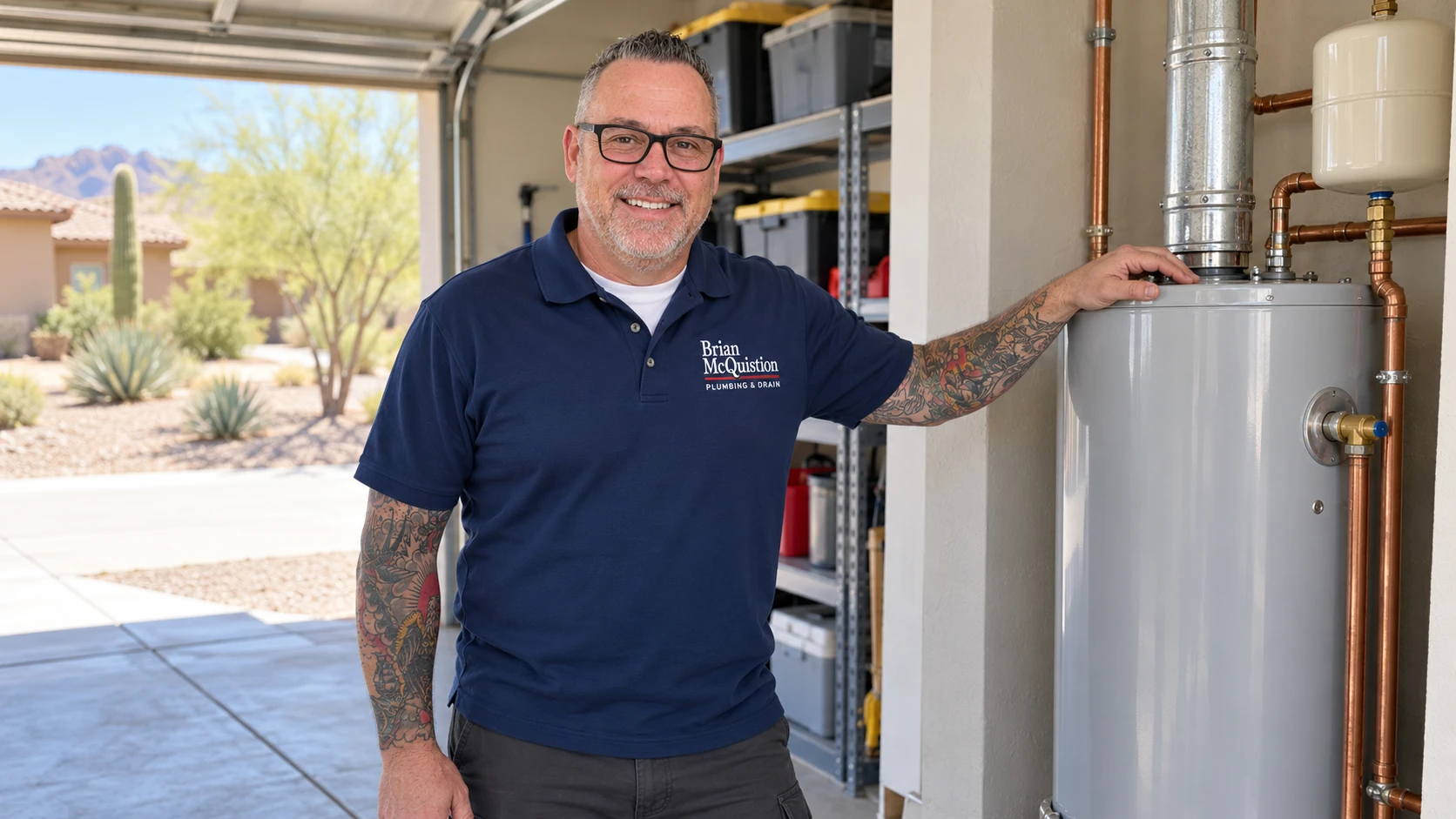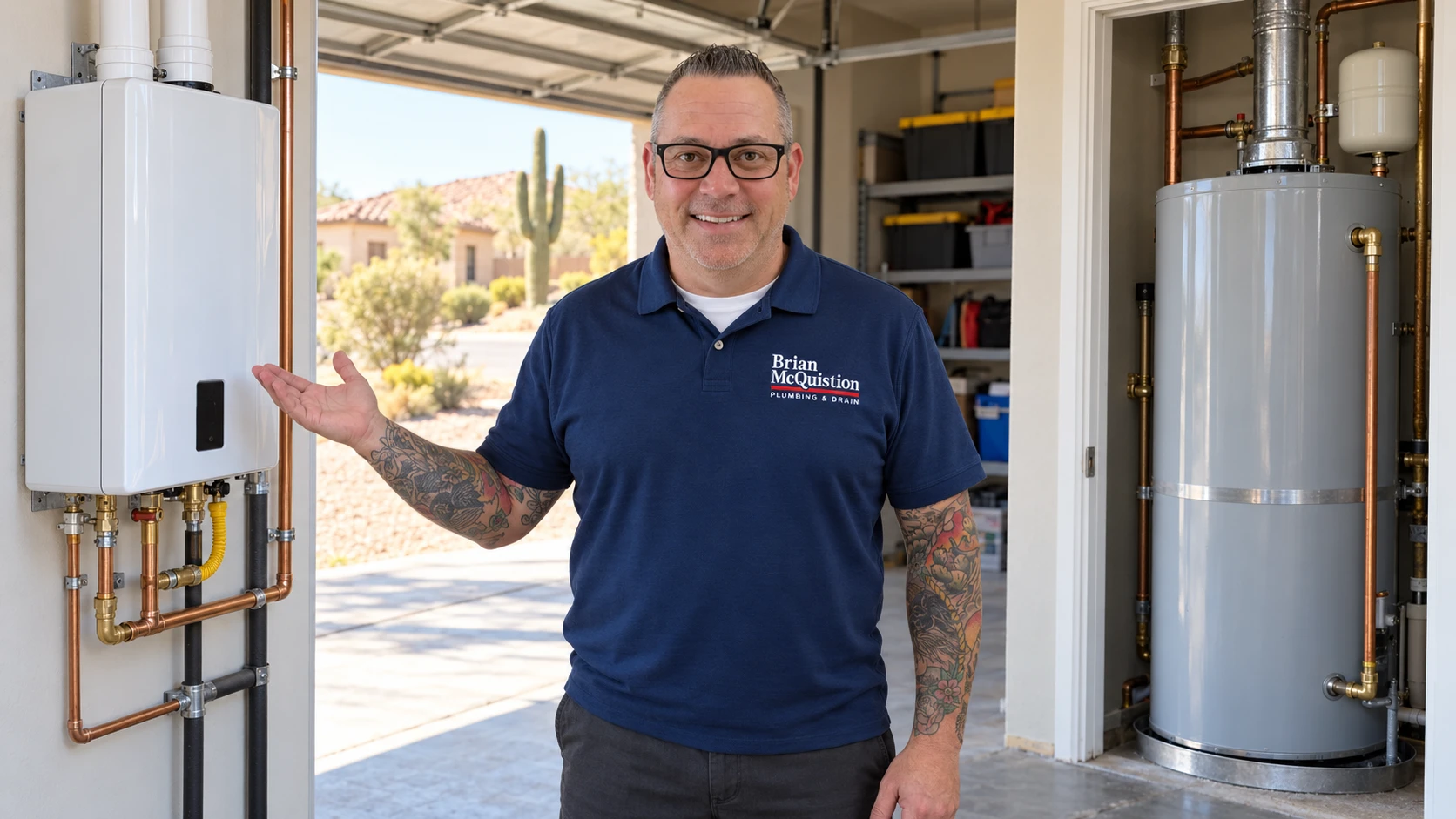
Repair a water heater when a part has failed and the tank is sound. Replacement usually makes more sense when the tank itself leaks or is rusting, or when it keeps needing repairs.
Why decide before the heater quits?
Cooler mornings make a weak heater easier to notice. A shower that used to feel fine now feels short. That's a good time to decide what to do, because you still have hot water and time to compare options.
Wait for a total failure and you'll be making the call in a hurry, with water on the floor or no hot water at all. Nobody chooses well standing in a wet garage.
The choice comes down to a few questions. How old is the heater? Is the problem a part, or the tank itself? How many repairs has it already had? Honest answers to those beat any guess.
If you don't know the age, start with the water heater lifespan post. It shows how to read the label to find the heater's age.
When does repairing a water heater make sense?
Repair fits when the problem is a part and the rest of the heater is sound. Common examples:
- A thermostat that no longer holds the temperature
- A heating element that has burned out on an electric heater
- A gas control or burner problem on a gas heater
- A relief valve or fitting that drips
- A used-up anode rod on a tank that is otherwise in good shape
The common thread: the part failed, and the tank didn't. Parts wear out on healthy heaters too, and replacing one can be a sensible way to keep a good heater going, especially when it isn't near the end of its expected life.
Repair also makes more sense when it's the first problem, not the fourth. One repair on a heater with a clean history is a different call from another repair on a heater that needs attention every season.
A plumber can check the tank inside and out before recommending a repair. A new part won't help a tank that is rusting from the inside.
When is replacement the smarter move?
Some problems point at the tank, and the tank is the one piece you can't swap out on its own.
- Water leaking from the tank body. A tank that has leaked through usually can't be repaired. Water at a valve or a pipe connection is a different story and may be repairable, so a plumber has to tell you which one you have.
- Rust-colored hot water that keeps coming back. That can point to corrosion inside the tank.
- Repeated repairs. When one fix is followed by another, that's a sign to weigh replacement.
- Heavy sediment noise that flushing did not fix. Popping and rumbling can mean sediment has built up in the tank. If it comes back after a flush, take the hint.
- A heater at or past the age range for its type. The closer it is to the end, the less any repair buys.
One sign alone doesn't settle it. Two or three together, on an older heater, strengthen the case. A licensed plumber is the right person to sort it out, because water at the base of a heater can come from several places.
How do you weigh repair against replacement?
Use three checks.
- Age against expected life. The closer the heater is to the end of its range, the less a repair buys you.
- Part or tank. A failed part can be replaced. A failed tank can't.
- Repair history. Think about the last couple of years. If you're asking this question for the second or third time, that history belongs in the decision.
Cost belongs in the weighing, and it comes down to factors, not a formula. On the repair side, it's which part failed, how easy it is to reach, and how long the fix should last. On the replacement side, it's the type and size of the new heater, the gas, venting, and electrical work it needs, and the safety parts your city's code calls for.
Ask for both options with the details spelled out. You approve the price before any work starts, so there's no reason to decide from a rough guess. If the repair looks like a big share of what a replacement would take, and the heater is already older, that's a reason to weigh replacement seriously.
What happens when you replace one?
A plumber sizes the new heater to your household's hot-water use. A heater that's too small runs out. One that's too large can cost more to buy and to run.
The install covers the water connections, the gas or electrical supply, the venting on a gas heater, and the safety parts the code calls for. Which parts those are, and whether a permit is needed, depends on the city. We serve 39 Valley cities, including Chandler and Phoenix, and permit and code rules can differ from one city to the next. Ask how permits are handled in your city before you agree to anything.
This is also the moment to think about type. If you're curious about switching from a tank to tankless, that choice can change the gas, venting, and power work, so raise it early, before the old unit comes out. Our tank vs tankless guide for Phoenix homes can help you weigh it.
When should you call a licensed plumber?
Call when you see rust in the hot water, water at the base of the heater, noise that keeps coming back, or a heater that has already needed several repairs. A licensed plumber can check the age, look at the tank and the parts, and tell you plainly which side of the line you're on.
If you find water around the heater, close the cold water valve on the pipe above it. If water is near anything electrical, stay away and call a licensed plumber or electrician. If you smell gas, leave the house and call your gas utility or 911.
Brian's been a plumber in the Valley for 20+ years, and when a repair is the right answer, that's the answer you should hear. If your heater is getting on in years, schedule a water heater check before the first cold morning turns into a cold shower.
Common Questions
There is no single cutoff. A storage tank heater does not last forever, so one that has been in service a long time needs a closer look before you spend money on repairs. A plumber can check its age and condition.
Part repairs, such as a thermostat, a heating element, a gas control, or a valve, can make sense on a heater that is otherwise sound. A repair on a tank that is rusting or leaking usually does not.
Water coming from the tank body usually means replacement, because a tank that has leaked through generally cannot be repaired. Water at a valve or pipe connection can often be repaired, so a plumber needs to confirm which one you have.
The decision works the same way for both. What differs is the parts: gas heaters have burners and gas controls, and electric heaters have heating elements and thermostats.
Permit rules come from your city and differ from one city to the next. Ask your plumber how permits are handled where you live before you agree to the job.