Thanksgiving is Thursday, November 26, which gives you time to get ahead of the drain problems a holiday can cause. Grease, a disposal working overtime, and a house full of guests are the usual pressure points. Each one has a fix you can start this week.
Which drains should you test first?
Run water in every drain in the house and watch what happens. That means the kitchen sink, each bathroom sink, the tubs and showers, and a flush of every toilet. Water should leave quickly and quietly. Slow draining, gurgling, or a bad smell is a warning.
One slow drain usually points to a clog in that drain. Several slow drains at once can point to the line they share, and that's worth a call before guests arrive, not after.
While you're at it, look under the kitchen sink with a flashlight. Damp cabinet floors, drips at the connections, or a musty smell are worth fixing before that sink works a double shift.
Don't forget the guest bathroom. A drain nobody has used in a while can dry out its trap, the curved pipe under the sink that holds a little water to block odors. Run the water in the sink, tub, and toilet a few days ahead so the trap refills and the room doesn't greet your guests with a sewer smell.
What do you do with Thanksgiving grease?
Water utilities ask residents to keep cooking grease out of drains, and the reason is simple physics. Grease pours as a liquid, then cools and hardens inside the pipe. It coats the walls, catches food bits, and narrows the pipe a little more with each meal.
Turkey, butter, oil, and drippings add up on a holiday. Here's what to do with them:
- Wipe greasy pans and baking sheets with a paper towel and put it in the trash.
- Pour extra grease into a container, let it cool and harden, then throw it away.
- Put a strainer in the sink drain to catch food bits.
- Tell everyone who's helping in the kitchen. It only takes one person forgetting.
Rinsing with hot water and dish soap doesn't make it safe. It can carry the grease farther down the line, where it cools out of sight.
What should stay out of the garbage disposal?
Check your disposal's manual first, because manufacturers differ, and some models handle foods that others don't. When in doubt, use the trash.
Bones, corn husks, celery and other stringy vegetables, and potato peels are commonly kept out of disposals. Stringy scraps can wrap around the moving parts, and starchy peels can turn into a paste that settles in the drain line.
During a big meal, the best habit is to scrape plates into the trash and save the disposal for small, soft scraps. Run cold water while it works and for a moment after.
Small amounts of soft scraps are what a disposal is made for. The trouble starts when a whole afternoon of peels and trimmings goes in at once. Feed it a little at a time, and let it clear before you add more.
Never put your hand into a disposal, even when it's off. If it jams, switch it off and leave it alone until you know what's wrong. If yours already hums or sticks, the garbage disposal troubleshooting guide covers the safe checks, and a licensed plumber handles the rest through garbage disposal service.
How do you get bathrooms ready for a full house?
Toilets are built for ordinary use, and a busy day is still ordinary use. The trouble comes from what goes in besides toilet paper.
Put a small trash can with a lid in the guest bathroom. Wipes, paper towels, and cotton balls belong in it. Products labeled flushable can still clog a line, so treat them like trash.
Keep a plunger where guests can find it, and show your family where the shutoff valve behind each toilet is. If a toilet ever starts to overflow, turning that valve stops more water from coming in.
What if a drain backs up with guests in the house?
Stop using the drain or fixture at once. Running more water into a backed-up drain just moves the problem to the floor.
If it's a toilet, a plunger is a reasonable first try. If it's the kitchen sink, stop the disposal and the dishwasher and stop adding water. If nothing clears it, call a licensed plumber.
If sewage comes up in a tub, a shower, or a floor drain, or a toilet overflows with sewage, keep everyone out of the area, keep kids and pets away, stop using water in the house, and call a licensed plumber. Avoid contact with the water. We answer 24/7, holiday or not.
When should you call a licensed plumber?
Call ahead of time if any drain is slow, gurgles, or has more than one fixture acting up. A licensed plumber can clear the drain, look inside the line with a camera when the cause isn't clear, and tell you what needs attention before company arrives. You'll see the price and approve it before any work starts.
In many kitchens the dishwasher drains into the same line as the sink, so a slow sink can slow the dishwasher too. Mention it if you call.
A simple plan works. Three weeks out, test every drain and book a plumber for any that are slow. One week out, clean the sink strainers, brief the cooks on grease, and stock the guest bathroom. On the day, scrape instead of rinsing, and keep an eye on the drains between courses.
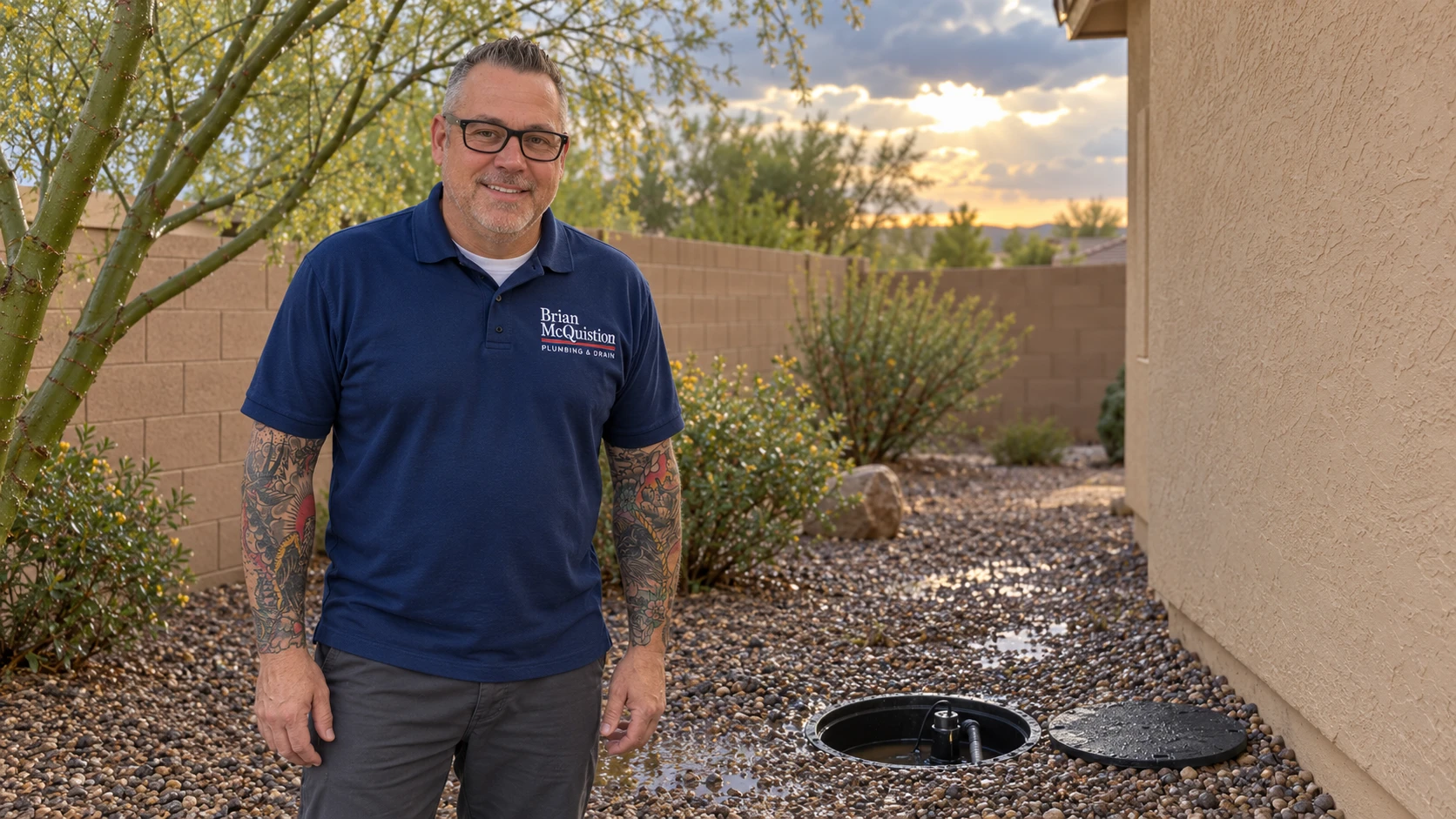
Brian has been a plumber in the Valley for 20+ years, and a slow drain in early November is much easier to deal with than a backup with the turkey in the oven. If something is running slow, schedule drain cleaning before the week of the meal.
Common Questions
No. Grease is liquid while it is hot, then it cools and hardens inside the pipes, where it catches other debris. Wipe pans with a paper towel, or let the grease cool in a container and put it in the trash.
Check your manual first, because manufacturers differ. Bones, corn husks, stringy vegetables like celery, and potato peels are commonly kept out of disposals, and the trash is the safe place for them.
A busy house uses toilets more, but ordinary use is what they are built for. Clogs usually come from things that do not belong there, like wipes and paper towels, so put a small trash can and a reminder in the guest bathroom.
Yes. A slow drain is easier to fix before a full house and heavy cooking turn it into a backup. Call a licensed plumber a couple of weeks ahead, not the day before.
No. There is no after-hours, weekend, or holiday surcharge.