If your tub, shower, or a floor drain is filling with sewage after a monsoon storm, stop using every drain in the house right now and keep everyone away from the backup. Then find out whether it's only your house or the whole street. That's a useful clue, but it doesn't settle who owns the problem.
Below: what to do first, what you can safely check, and how to tell a problem in your own line from a problem in the city's main.
What do I do first?
Safety comes before diagnosis. Do these before anything else:
- Stop using water. That means toilets, sinks, showers, the dishwasher, and the washing machine. Water you send down has nowhere to go and can come back up.
- Stay out of any room where water is standing near outlets, cords, or the panel. If a storm put water inside the house, call a licensed electrician or your electric utility before you go in.
- Keep children and pets out of the area.
- Do not touch the backup with bare hands, and don't try to clean it up yet.
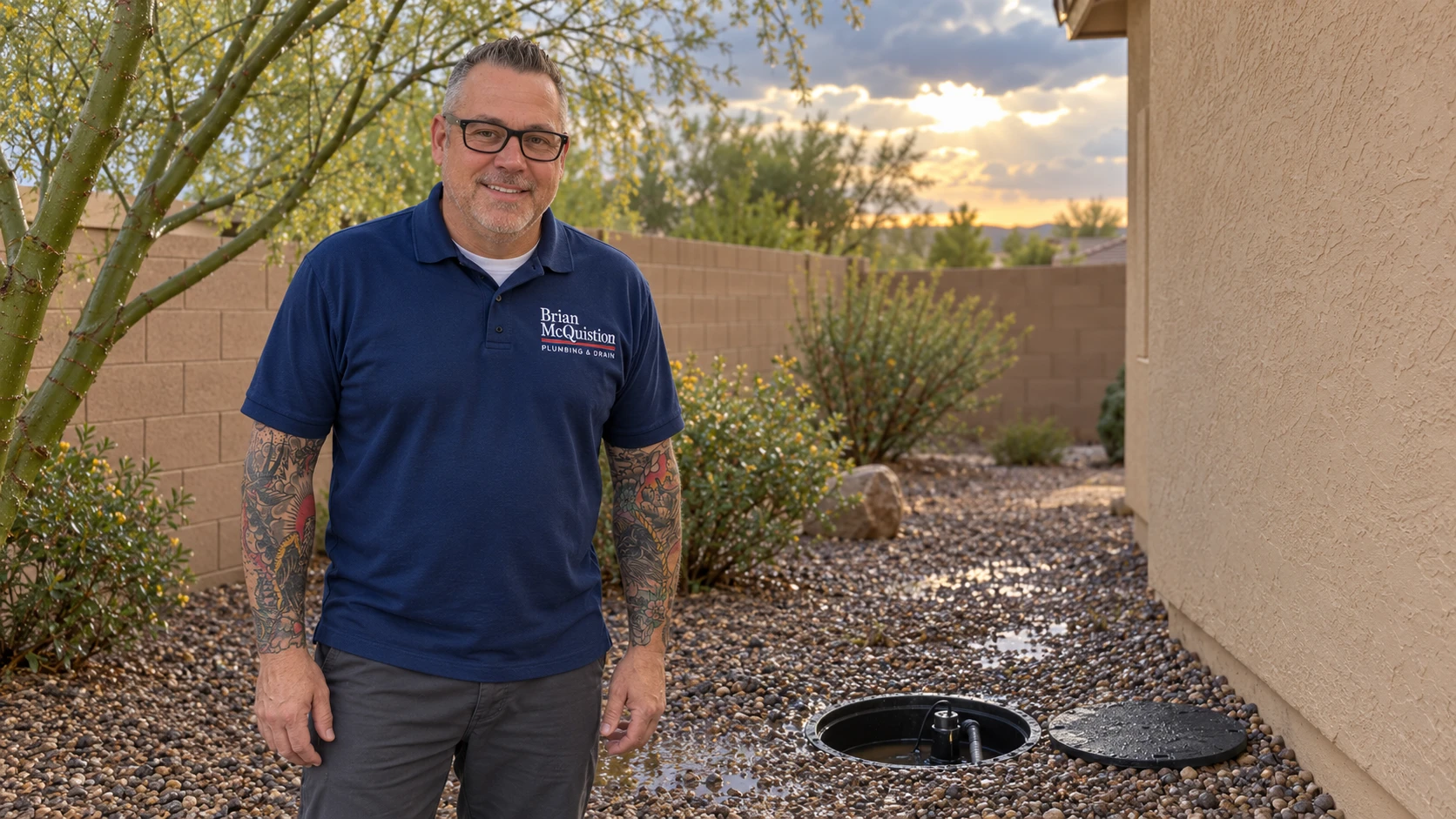
- Do not open the cleanout cap in your yard. A cleanout is the capped pipe that gives a plumber access to the line. If the line is full, opening it can send sewage out onto the ground.
Then call. Sewage backing up inside your home is an emergency, and it shouldn't wait for morning.
Keep your phone and your notes close. If the power went out in the storm, or the ground around the house is flooded, say so when you call, so the plumber can plan a safe way in.
Can heavy rain cause a sewer backup?
Sometimes, and it depends on where you live. In the Valley, monsoon season officially runs from mid-June through the end of September, according to the National Weather Service.
Rain doesn't affect sewer lines the same way everywhere. Whether storm water and sewage travel in separate pipes, and how rain gets into a sewer at all, depends on how each city and utility built and runs its system. There's no single rule for the whole Valley. Your city or sewer utility can tell you how yours works.
A backup that starts during or right after a storm doesn't always mean the storm caused it. A line that was already partly blocked can show up as a backup the first time everyone runs water. Either way, the steps are the same.
Is it my line or the city's main?
Your house connects to the city's sewer main through a pipe called the lateral. Who owns which part of that pipe depends on your city, so confirm it with your city or utility before you count on either answer.
These clues help you narrow it down:
- One house or many. If neighbors on your street have the same problem, the city's main is a likely cause. If only your house is affected, look at your own line.
- Which fixtures. A backup that shows up at the lowest drain in the house, often a tub, shower, or floor drain, when you flush or run water elsewhere, can point to a blockage in the main line for the house.
- One fixture or all of them. One slow sink is usually a clog in that sink's own drain. A backup in several places at once points to the main line.
None of these is proof. A plumber with a sewer camera can see what's going on inside the line. That's how you know instead of guess.
Who do I call first, the city or a plumber?
If you know neighbors are affected, call your city or sewer utility first. They handle the main and often have an emergency line. Have your address ready and tell them sewage is coming up inside your home.
If it's only your house, or you can't tell, call a licensed plumber. Calling both is fine. Sewage in the house can't wait for a ruling on who owns which pipe, so you don't have to settle that before you pick up the phone. The plumber looks at your side of the line, and the utility handles its side. Repairs to the city's main are the utility's job, but a plumber can tell you when that's where the trouble is, which saves you from guessing.
What can I check without touching the sewage?
You can gather useful information without going near the backup:
- Note which fixtures are backing up and which aren't.
- Note what you ran right before it started, such as a flush, a shower, or the washing machine.
- Ask a neighbor, or check your neighborhood group, whether anyone else has the same problem.
- Take photos of the backup and any damage before cleanup.
Write these down. The plumber will ask, and having the answers ready saves time.
When to call a licensed plumber
Call a licensed plumber right away when sewage is coming up inside your home, when more than one fixture is affected, or when you can't tell whose line it is. A plumber can inspect your line, clear a blockage on your side, and tell you if the trouble is in the city's main.
Expect questions: which drains are backing up, when it started, and whether the neighbors are affected. Have those notes handy. If the line needs more than a clearing, the plumber will explain what they found and what the fix involves before you decide anything.
Our phones are answered 24/7, and nothing starts until you've seen and approved the price. You can read more about our sewer line service or drain cleaning. If there's sewage in the house right now, skip the reading, call our emergency plumber line, and keep the water off while you wait.
Common Questions
It can, but how rain reaches the sewer depends on your city and how its systems are built. If a backup starts during or right after a storm, tell the plumber and ask your city or utility how its system works.
If only your house is backing up, the problem is often in your own line. If neighbors have the same problem, the city's main may be the cause. A licensed plumber can check your side, and your city or utility handles its main.
If neighbors are affected too, call your city or sewer utility right away. If it is only your house, call a licensed plumber. When you are not sure, calling both is fine.
No. Stop using toilets, sinks, showers, and washers until the cause is found. Every gallon you send down has nowhere to go and can come back up in your home.